Panel Replacements 5 min read
Federal Pacific and Zinsco Panels in Arizona: Why Insurers Flag Them
Quick answer
Learn why Federal Pacific, Stab-Lok, Zinsco, and Sylvania panels draw safety and insurance concerns, plus how replacement works in Arizona.
Need help with this? See our electrical panel replacement service.
Most people find out one of two ways. Either a home inspector flags the electrical panel during a sale, or an insurance renewal letter shows up asking for photos of the panel and then asking for a lot more than that. Two brand names cause most of this: Federal Pacific Electric (the Stab-Lok panel) and Zinsco, later sold under the GTE-Sylvania name. Both were installed in millions of American homes from the 1950s through the 1980s, which happens to be exactly when huge stretches of Mesa, Tempe, Scottsdale, and central Phoenix were built.
If you own a Valley home from that era and you have never looked at the label on your panel, this post is worth five minutes of your time.
What Went Wrong With These Panels
Federal Pacific Stab-Lok. A breaker has exactly one job: trip and cut the power when a circuit is overloaded or shorted. Federal Pacific breakers, tested independently after a Consumer Product Safety Commission investigation in the early 1980s, failed to trip at rates far beyond anything acceptable, with some test scenarios showing failure rates between 25 and 65 percent. Later testing of thousands of Stab-Lok breakers found roughly one in four defective. Estimates have connected these panels to around 2,800 fires a year nationally. Some Stab-Lok breakers can even fail to cut power when the handle is switched off, which is as dangerous as it sounds. It also came out that FPE had falsified UL testing data, which is why you will not find a serious electrician willing to defend these panels.
Zinsco. Zinsco panels have a different failure mode with the same ending. Their aluminum bus bars corrode, and the breakers can overheat and literally weld themselves to the bus. A breaker fused to the bus can keep feeding a shorted circuit indefinitely, cooking the wiring while everything looks normal from the outside. Zinsco panels also commonly show scorching and melting behind the cover with no outward sign on the breaker handles.
How to Tell What You Have
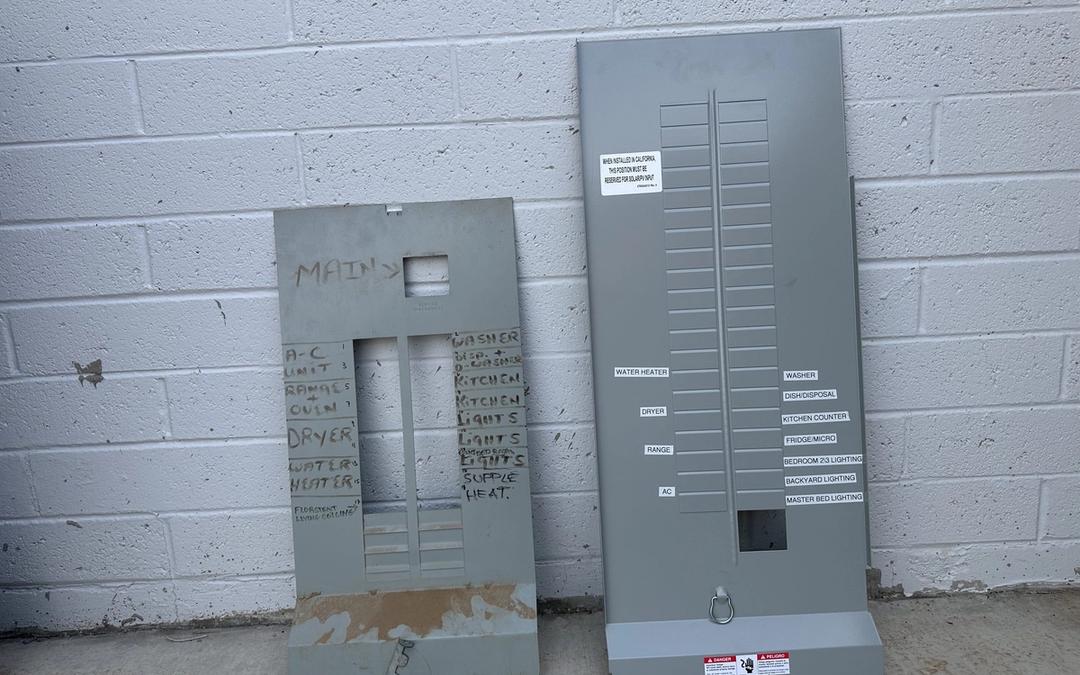
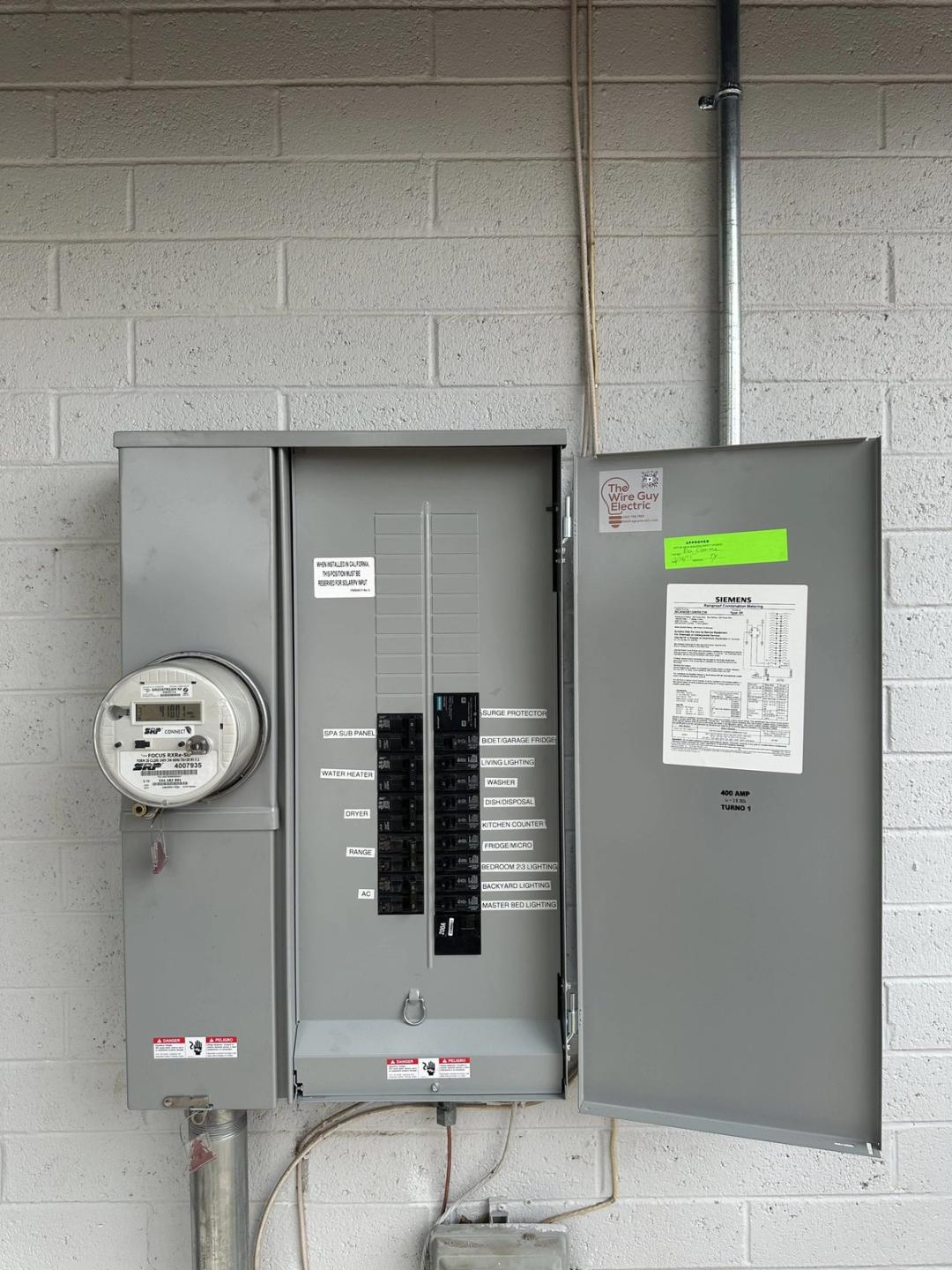
You do not need to pull the panel cover, and you should not. Look at the label on the door. Federal Pacific panels usually say Federal Pacific Electric, FPE, or Stab-Lok right on the label or inside the door, and the breakers are distinctive skinny units with an orange stripe on many models. Zinsco panels say Zinsco or Sylvania, and the breaker handles often come in colors, red, green, and blue. On a lot of Arizona homes the panel is outside, and forty years of sun may have baked the label into illegibility. If that is your situation, take a photo of the panel with the door open and send it to us, and we can usually identify it on sight.
Why Insurance Companies Care So Much
Insurers have been tightening on electrical risk for years, and FPE and Zinsco panels are at the top of their list. Depending on the carrier, a flagged panel can mean a required replacement before they will write the policy, a non-renewal notice on an existing policy, or an exclusion that leaves you exposed on exactly the kind of fire these panels cause. Inspection-driven states saw this first, but carriers apply the same playbook in Arizona, and we hear from more homeowners every year who got the letter.
It bites during a sale, too. A buyer's inspector will flag the panel, the buyer's insurer may refuse to bind coverage until it is replaced, and suddenly your closing depends on an electrical project you did not plan. If a sale is anywhere on your horizon, we walked through this dynamic in our post on electrical inspections before selling a home in Phoenix.
Heat Makes Old Panels Worse in Arizona
Most Valley panels live outdoors, often on a west-facing wall that bakes at 115 degrees all afternoon. Decades of daily heating and cooling cycles work connections loose and age breaker internals faster than the same panel would age in a mild climate. A panel design that was already marginal when it was new has had a rough forty years here. This is one reason we take FPE and Zinsco panels more seriously in Arizona than a checklist from a milder state would suggest.
What Replacement Actually Involves (and Costs)
First, what does not work: swapping in replacement breakers. Aftermarket Stab-Lok-style breakers exist, but they do not fix the bus design, the connection points, or anything else structural about the panel. Insurers generally do not accept it either. The fix is a new panel.
A standard 200-amp like-for-like panel replacement in the Phoenix metro runs $5,200 to $6,500. A full service replacement with a new all-in-one meter base and panel runs $6,400 to $8,750. Those numbers include permits and coordination with SRP or APS for the disconnect and reconnect, and you should plan on a day without power while the work happens. We broke down where that money goes in our full guide to electrical panel upgrade costs in Arizona, and you can see what the work looks like on our panel upgrade service page.
The upside is real: a modern panel with room for the way homes actually run now, an insurance file that closes instead of escalating, and one less thing for a future buyer's inspector to find. Most carriers reinstate or bind coverage quickly once you send photos of the new panel and the finaled permit.
Not Sure Whether Yours Needs to Go?
Not every old panel is an emergency, and we are not in the business of scaring people into replacements. If your panel is a flagged brand, though, the honest answer is that it will need replacing. If you are seeing symptoms in the meantime, flickering, warm breakers, or a panel that trips oddly, our post on the 7 signs you need a panel upgrade covers what those symptoms mean.
When to Call Us
Call a licensed electrician if your panel label says Federal Pacific, FPE, Stab-Lok, Zinsco, or Sylvania, if an insurer or inspector has flagged your panel, or if you are buying or selling a Valley home built between the 1950s and the 1980s and nobody has looked at the electrical yet. Send us a photo of the panel and we will tell you straight what you have and whether it needs to go.
At The Wire Guy Electric (Arizona ROC 365306), we replace flagged panels across the Valley, handle the permits and utility coordination, and give you the documentation your insurer wants to see.
We serve Mesa, Scottsdale, Gilbert, Chandler, Tempe, Queen Creek, Paradise Valley, and Fountain Hills. Request a free estimate and we'll tell you exactly what you're working with.