
Commercial Electrical Service 7 min read
Commercial Electrical Maintenance in Arizona: What to Check and When
Quick answer
Plan on a yearly infrared scan of panels and disconnects under load, monthly tests on emergency lights (30 seconds each) and GFCIs, and a full 90-minute emergency lighting test once a year. In the Valley, add two seasonal walkthroughs: one in spring before the heat, and one after monsoon season ends September 30.
Need help with this? See our Commercial Electrical Service service.
Most commercial electrical repair calls we take in the Valley start the same way. Something had been running hot for months and finally let go, usually on a summer afternoon under the building's heaviest load. It did not fail out of nowhere. Nobody was looking at it.
That is what commercial electrical maintenance is for: a short list of things checked on a schedule, written down, and fixed while they are still small. Here is what belongs on that list for a retail center, office, restaurant, or warehouse in Mesa and the East Valley, how often, and what Arizona heat and monsoon dust change.
What Preventive Maintenance Actually Covers
For most small and mid-size commercial buildings, the list looks like this:
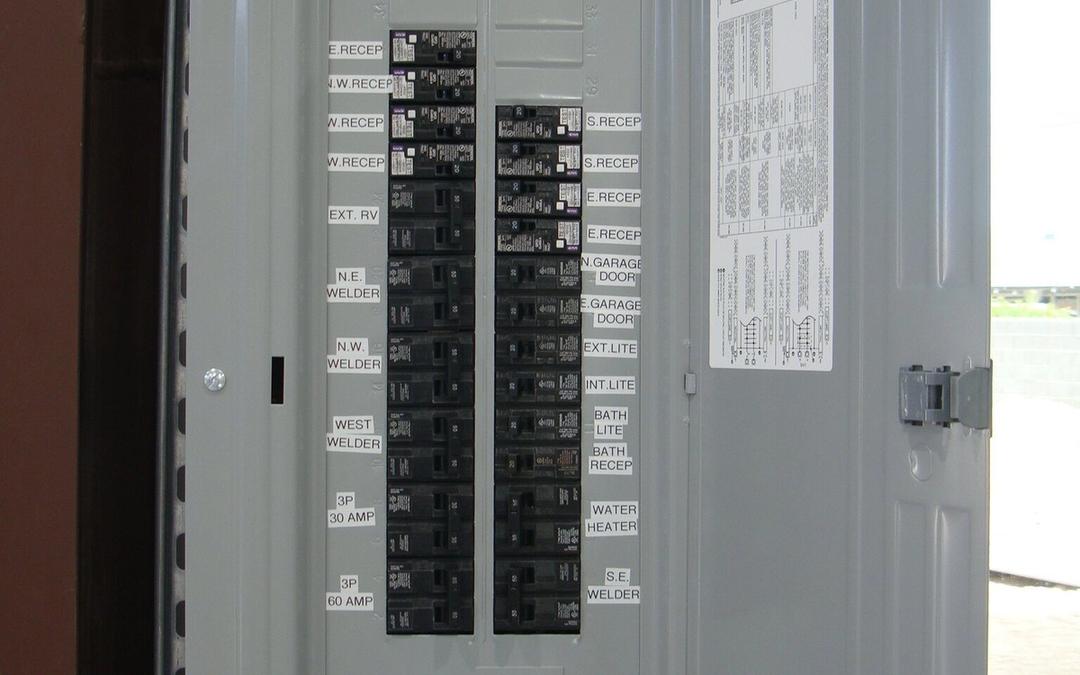
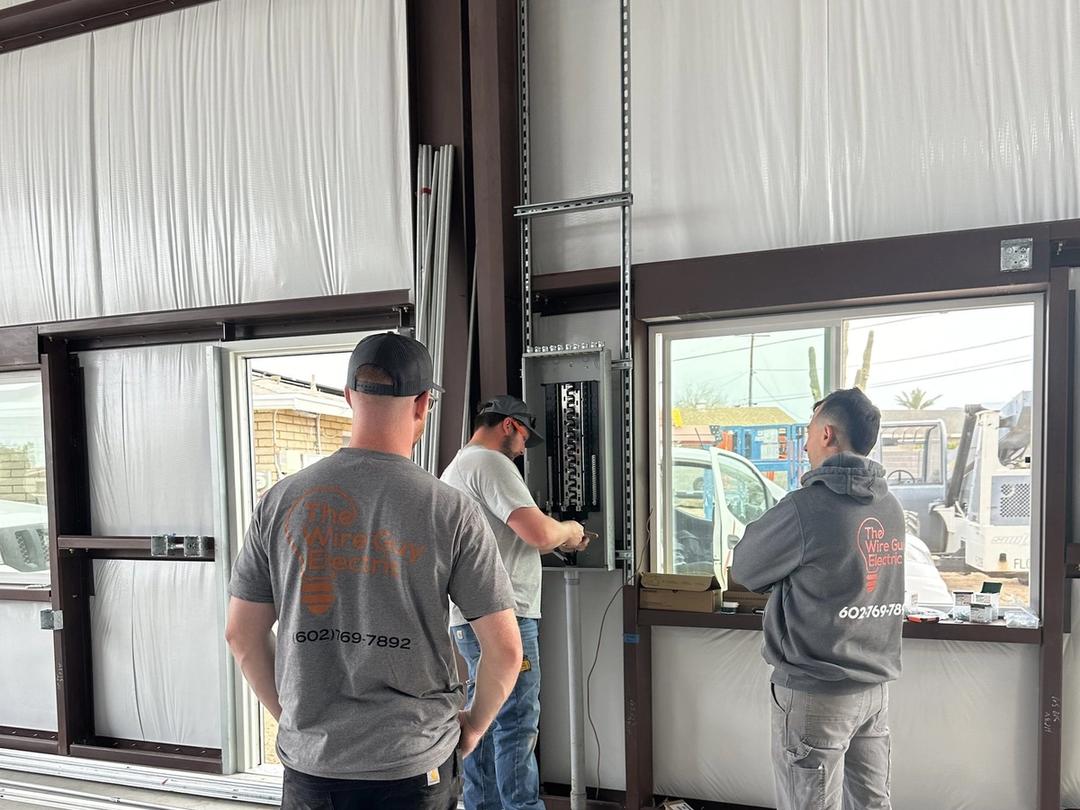
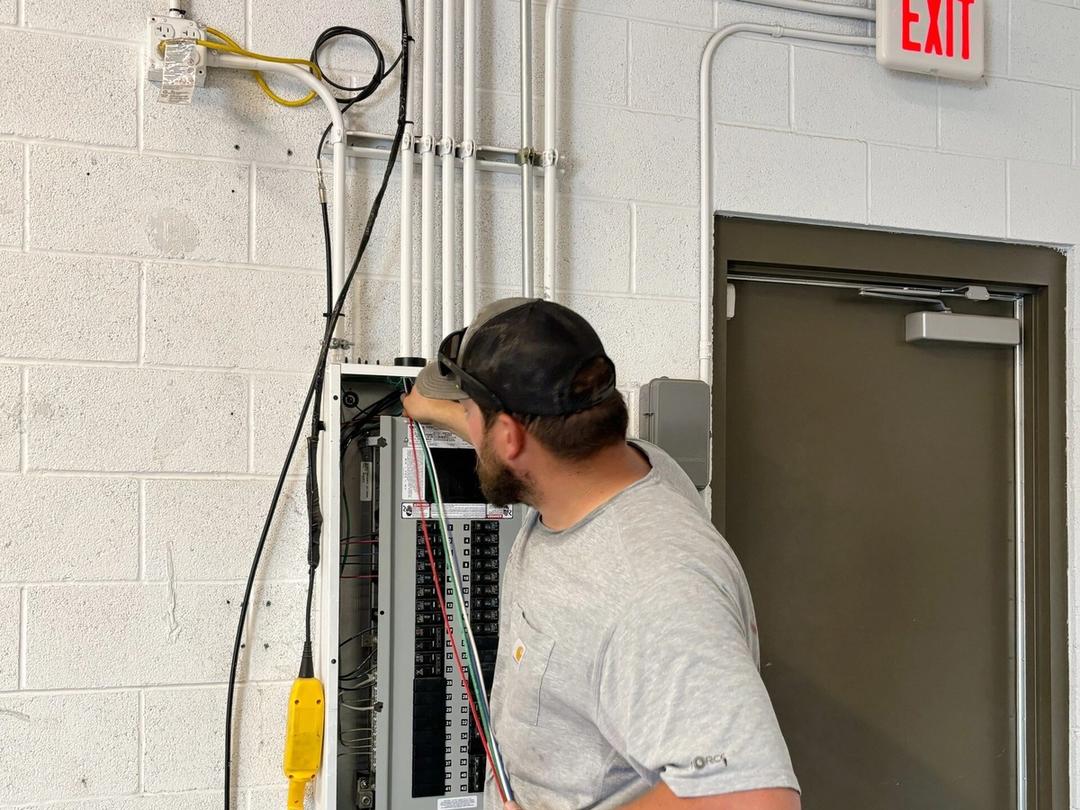
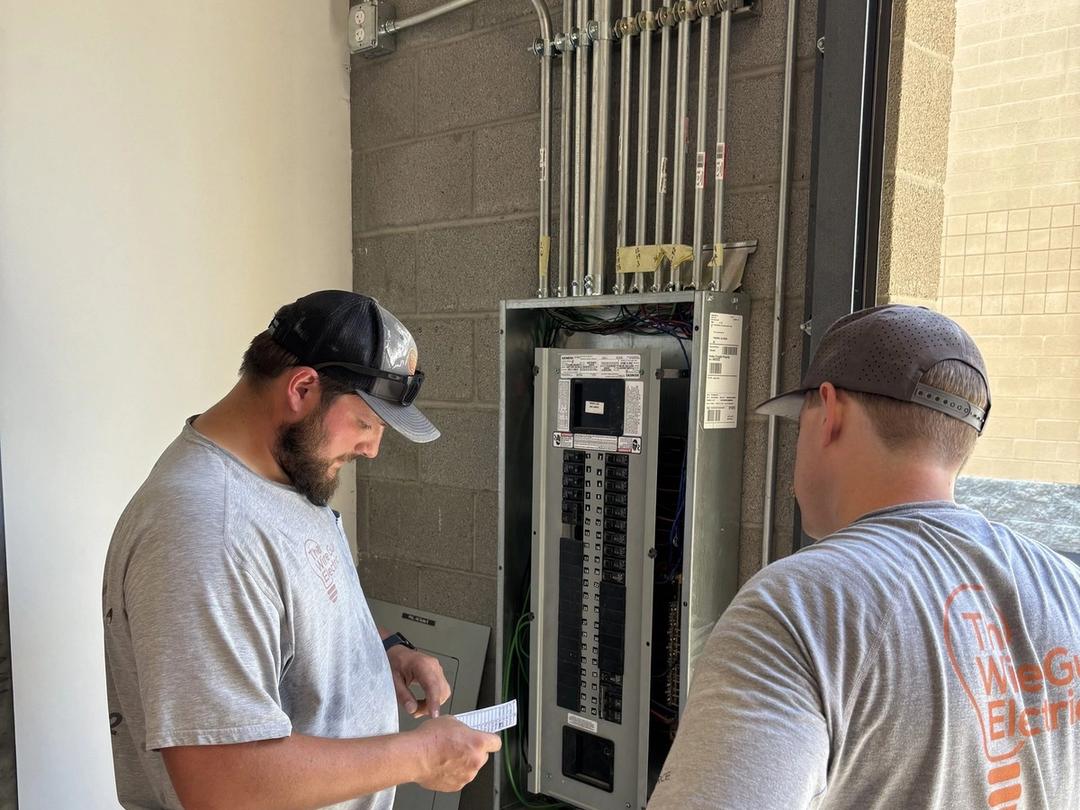
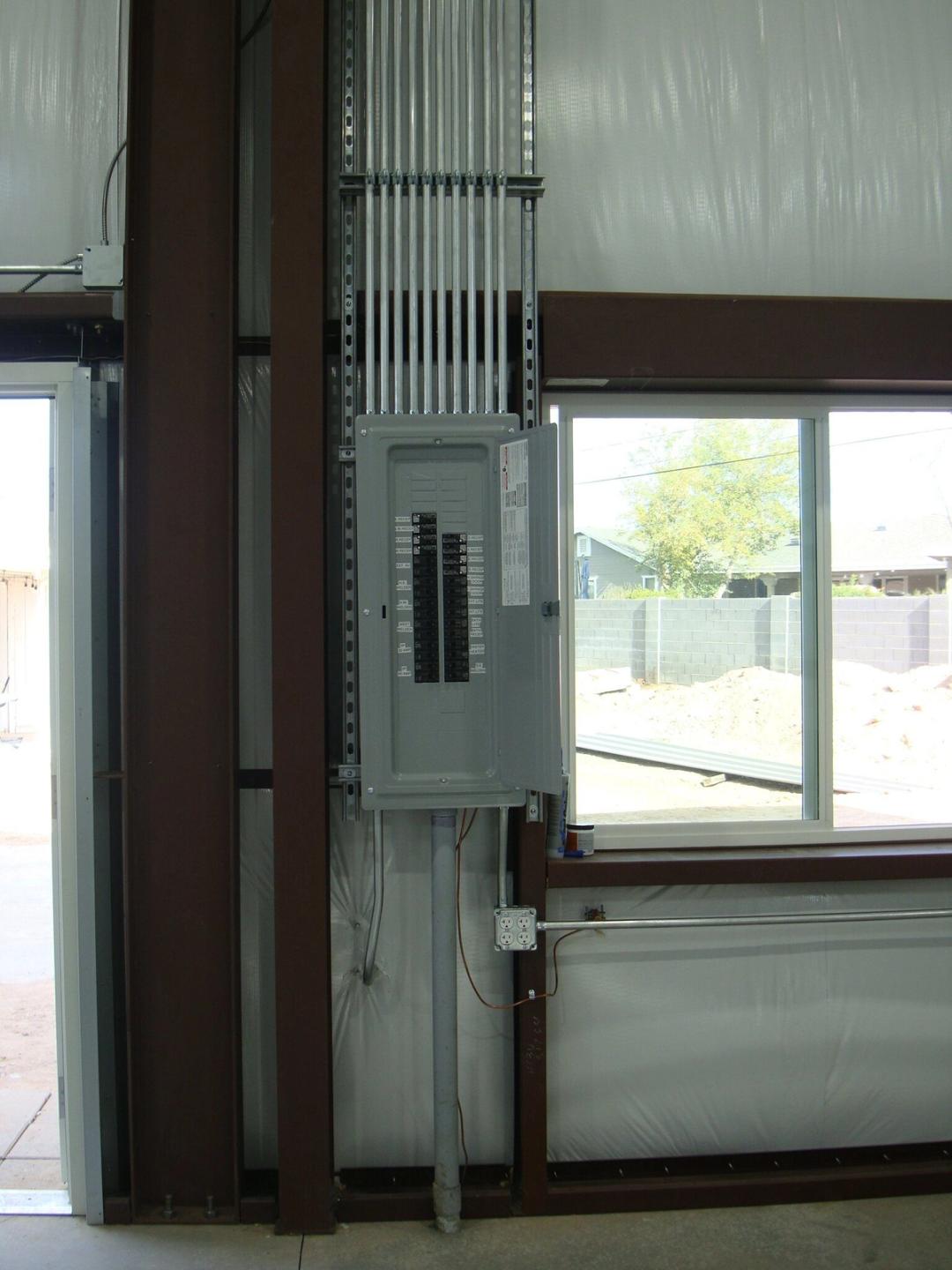
- Panels and switchgear. Covers off, looking for heat discoloration, corrosion, dust, open breaker slots, and breakers that do not match the wire they protect.
- Infrared scan. A thermal camera on panels, disconnects, and terminations while the building is running. More on that below.
- Connection checks. Terminations that show heat on the scan get checked against the manufacturer's torque values with the power off.
- Emergency and exit lights. Monthly and annual testing, battery replacement, and a check that the egress path still matches the floor plan.
- GFCI devices. Kitchens, restrooms, rooftops, and exterior receptacles. Pushing the test button is the whole test, and it is the one that gets skipped.
- Interior lighting. Failing ballasts, flickering tubes, and whether it is time to convert a whole floor to LED instead of chasing fixtures one at a time.
- Parking lot and storefront lighting. Pole lights, wall packs, sign circuits, photocells, and timers.
- Surge protection. If there is a surge protective device at the service, its status indicator gets checked.
- Rooftop HVAC disconnects. The boxes next to every rooftop unit, which take more abuse than anything else on the property.
- Labeling and panel schedules. A directory that matches what is actually on each breaker.
Handling that list across one building or several is the core of our commercial service and maintenance work.
Why the Valley Is Hard on Electrical Equipment
Connections fail from heat and movement. Every time a load comes on, the conductor and lug warm up and expand a little, then cool and contract when it shuts off. A rooftop unit cycling all day through a Mesa summer does that constantly, starting from a roof deck that is already baking. Over a few seasons a tight connection works loose, and a loose connection makes more heat, which loosens it further.
Then there is dust. Haboobs push it into panels, disconnects, and fixtures, where it holds moisture against contacts and blankets parts that are supposed to shed heat. The National Weather Service defines monsoon season as June 15 through September 30, and that window brings the lightning, wind-driven rain, and surges that do the most damage to Valley buildings.
Rooftop disconnects get the worst of it: full sun, dried-out gaskets, and whips gone chalky and cracked. Our post on AC disconnect boxes in Arizona covers the residential version, and all of it applies on a commercial roof.
Infrared Scans: Finding the Heat Before It Fails
A thermal camera shows heat you cannot see. A loose lug, an overloaded phase, or a failing breaker shows up as a hot spot well before it scorches or melts.
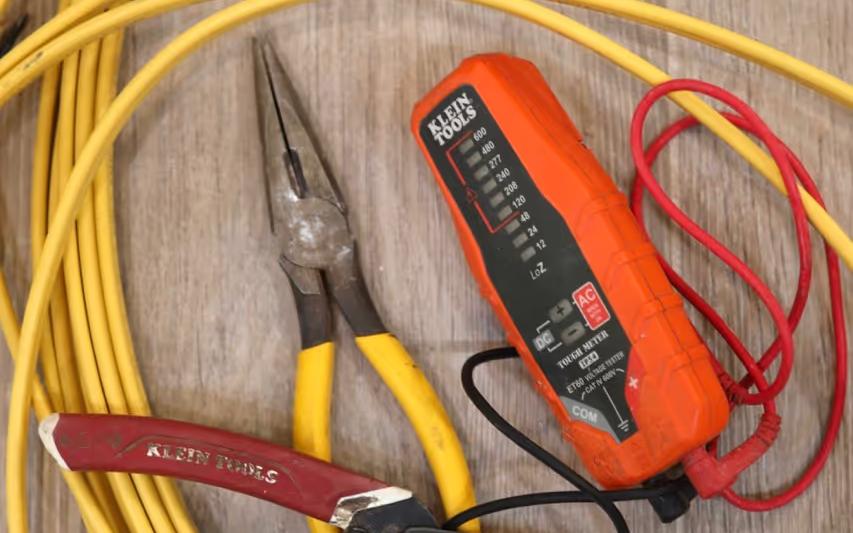
The catch is that the scan has to happen under real load. A connection with no current through it does not heat up, so a scan with the building dark tells you very little. That usually means scanning during operating hours, with covers removed by someone qualified to work around energized equipment.
Some commercial property insurers scan electrical equipment during their own loss control visits and refer policyholders to an electrician when they find a hot spot. If your carrier has handed you a report like that, our commercial electrical troubleshooting page covers how we trace a hot spot to its cause.
What NFPA 70B Says, in Plain Terms
NFPA 70B is the National Fire Protection Association's document on electrical equipment maintenance. For fifty years it was a recommended practice. With the 2023 edition, effective January 2023, it became a standard, written in terms of what must be done rather than what should be, and NFPA has since published a 2026 edition. NFPA's own overview of that change (opens in a new tab) is a quick read.
The useful idea for a business owner is how it sets intervals. Equipment is rated on three things: its physical condition, how critical it is, and the environment it operates in. Whichever of those is worst drives how often it gets maintained. A clean, newer panel in a conditioned electrical room lands on a longer interval than an older one in a dusty warehouse. Infrared inspection is on that schedule at least once a year, and more often for equipment already showing problems.
Whether a city or insurer enforces NFPA 70B at your building is a separate question, and NFPA itself has said jurisdictions may take time to work out how to use it. You do not need a copy to use the logic: look at your equipment on a schedule, look harder at the gear in the worst shape and the worst environment, and write down what you find.
Emergency Lights, Exit Signs, and GFCIs
These have the most clearly defined test intervals of anything on the list. As NFPA lays out in its guidance on NFPA 101, the Life Safety Code (opens in a new tab), battery-powered emergency lights need:
- A test of at least 30 seconds every month, usually with the unit's test button, to confirm the lamps work and the battery holds more than a residual charge.
- A full-duration test of at least 90 minutes once a year, to confirm the battery can carry the lights for the whole required period.
- Records of both. An undocumented test looks a lot like no test.
Self-testing units run their own tests, but they still need a visual check every 30 days for damage and warning indicators. Illuminated exit signs get a visual check at the same interval.
The annual test is where Valley buildings come up short. Heat shortens battery life, so a unit in a warehouse or near a roof deck can pass the monthly button test and still go dark well before 90 minutes. If yours are overdue, our emergency and exit lighting page explains how we handle testing and battery replacement.
GFCIs are simpler. The Consumer Product Safety Commission recommends testing them monthly with the built-in test button. One that will not trip, or will not reset, gets replaced.
What Fire Inspectors and Insurers Tend to Flag
The electrical items that come up on a routine business fire inspection are rarely exotic:
- Storage in front of electrical panels. That working space has to stay clear, and the back-of-house panel behind a stack of boxes is a classic finding.
- Extension cords and power strips doing the job of permanent wiring.
- Missing covers on junction boxes, outlets, and switches, and open slots in a panel where a breaker was removed.
- Exit signs that are dark and emergency lights that fail their test.
- Panel directories that are blank, faded, or label a breaker "spare" when it clearly feeds something.
An accurate panel schedule is the cheapest item on this list and one of the most useful. When something trips at 4 p.m. on a Friday, it is the difference between a quick reset and somebody flipping breakers until the wrong suite goes dark.
A Simple Seasonal Checklist
Pre-Summer: Spring, Before the Heat and Storms
- Infrared scan of main panels, subpanels, and rooftop disconnects while the building is under load
- Walk the roof: disconnect enclosures, gaskets, covers, whips, and conduit that has gone brittle in the sun
- Check the status indicator on the surge protector at the service
- Run the annual 90-minute emergency lighting test if it is due, and replace weak batteries before summer finishes them off
- Confirm photocells and timers on parking lot and storefront lighting, since sunset moves a long way between winter and summer
Post-Monsoon: October, Once the Season Ends
- Open exterior and rooftop enclosures and look for water, corrosion, and packed-in dust
- Repair pole lights, wall packs, and sign sections knocked out by storms or by water in a fixture
- Test GFCIs on the roof and exterior, which see the most moisture
- Check the surge protector status again
- Update the panel schedule for anything that changed over the summer
Every Month
Emergency light and GFCI tests, a look at the exit signs, a line in the log, and a walk past the panels to make sure nothing is stacked in front of them.
Getting It on a Schedule
None of this requires a big program, just somebody who owns the list. For property managers with several buildings, the value is one electrician who already knows where the panels are, which suites share distribution, and what was found last time. As a commercial electrician in Mesa, we would rather put that work on the calendar ahead of time than react to it on the hottest afternoon of the year.
Whether you need commercial electrical repair on something already failing, commercial wiring services for a change in the space, or a look at a building nobody has checked in years, request an estimate and tell us what you have. The Wire Guy Electric is family-owned and licensed in Arizona, ROC 365306.