
Whole-House Surge Protection 5 min read
Whole House Surge Protectors: What They Do, What They Cost, and Whether You Need One
Quick answer
Your power strip isn't protecting your AC, fridge, or anything hardwired. Here's what a panel-mounted surge protector actually does and why it matters in Arizona.
Need help with this? See our whole-house surge protection service.
Most Arizona homeowners have a few power strip surge protectors scattered around the house. One behind the TV, maybe one at the computer desk. And that's fine, as far as it goes. The problem is it doesn't go very far.
Your TV might be covered, but your air conditioner isn't. Neither is your refrigerator, your washer and dryer, your garage door opener, your pool pump, or any of the other hardwired and permanently connected equipment in your home. A power strip can't protect what isn't plugged into it.
That's what a whole house surge protector is for.
How It Works
A whole house surge protector is a device that mounts at your main electrical panel. It connects to a dedicated two-pole breaker and monitors the voltage coming into your home from the utility line.
When voltage spikes above a safe threshold, whether from lightning, a grid fluctuation, or the inrush current from your own AC compressor, the device shunts that excess energy to your grounding system before it reaches your circuits.
It's not dramatic. There's no light show or loud clunk. It just quietly handles spikes that would otherwise ripple through every wire in your house.
What It Costs
A professional installation in the Phoenix area runs $400 to $800 total. The device itself is $150 to $300 depending on the brand and joule rating. The remainder covers labor, a dedicated breaker, and testing.
It takes about an hour to install. There's no drywall work, no trenching, no multi-day project. We mount it, wire it, test it, and you're protected.
For perspective: replacing a refrigerator compressor board after a surge event costs $600 to $1,200. A new HVAC control board runs $500 to $1,000. A fried TV or gaming console is another $500 to $1,500. One bad surge can cost you more than the protector several times over.
Why This Matters More in Arizona
We install these year-round, but we get the most calls right before and right after monsoon season. There's a reason for that.
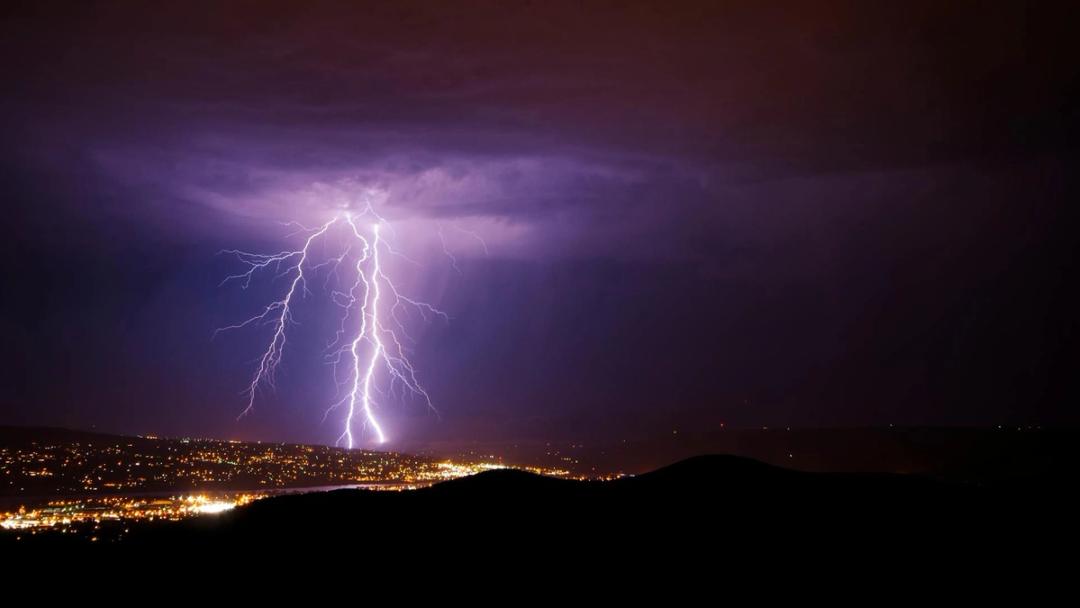
Lightning is the obvious one. Arizona monsoons produce some of the most intense lightning in the country. A strike doesn't have to hit your house to cause damage. It just has to hit somewhere on the same stretch of power line. The resulting voltage spike travels through the grid and into every connected home. We've seen single storms knock out TVs, routers, and garage door openers across entire neighborhoods.
But lightning isn't the biggest threat. The surges that cause the most cumulative damage are the small ones you never notice. Every time your AC compressor starts up, it pulls a brief surge of current that sends a ripple through your home's wiring. In Arizona, your AC might cycle 30 to 50 times a day during summer. Over the course of a season, those micro-surges degrade the electronics in your appliances, your smart thermostat, your router, and anything else with a circuit board.
Grid stress adds another layer. When it's 115°F and every house in the Valley is running AC simultaneously, the electrical grid is under peak load. Voltage sags, brief interruptions, and the surges that follow power restoration are all common during extreme heat events. Each one is a small hit to your connected equipment.
Older infrastructure makes it worse. Some parts of Mesa, Phoenix, and Tempe have transformers and utility lines that are decades old. Homes in these areas experience more frequent voltage irregularities than those in newer developments with updated grid equipment.
What It Protects
Everything connected to your electrical system. That includes your HVAC equipment, kitchen appliances, laundry machines, TVs and entertainment systems, computers and networking gear, smart home devices, security cameras, pool and spa equipment, EV chargers, and garage door openers.
Anything with a microprocessor or digital controls is especially vulnerable. And these days, that's almost everything. Even your refrigerator and oven have circuit boards that can be damaged by a surge.
Power Strips vs. Panel Protection
Power strips are fine as a second layer of defense, but they have real limitations.
They only protect what's plugged directly into them. They degrade over time. After absorbing enough surges, most strips silently lose their protective capability and just function as a regular power strip. There's usually no warning. The strip still works, you still see the little light, but the protection component is toast.
They also can't protect hardwired equipment. Your AC system, your oven, your water heater, your pool pump. None of these go through a power strip.
A panel-mounted protector covers everything on every circuit. We recommend using both: the panel protector as the primary barrier, and point-of-use strips on your most sensitive gear for an extra layer.
How Long They Last
Surge protectors are sacrificial by design. They absorb energy so your equipment doesn't have to, and that absorption capacity is finite.
Most quality units are rated for 50,000 to 100,000 joules over their lifetime. In the Phoenix area, with our lightning, AC cycling, and grid conditions, a unit typically lasts 5 to 10 years before it needs replacement.
Every modern unit has a status indicator, usually a green LED, that tells you whether the protection is still active. When it goes out or changes color, the device has done its job and needs to be swapped. We tell homeowners to check it once a year, usually in May before storm season starts.
Installation Details
The device mounts on or adjacent to your main electrical panel and connects to a dedicated 240-volt breaker. It also ties into your home's grounding system, which is where surge energy gets redirected.
Grounding quality matters. If your ground rods are corroded, your grounding conductor is undersized, or your bonding connections are loose, the surge protector can't do its job properly. During installation, we check all of this and flag anything that needs attention.
If your panel is full and there's no room for an additional breaker, we can sometimes use a tandem breaker or, in some cases, this becomes a good opportunity to talk about a panel upgrade that solves multiple problems at once.
Get It Installed
We install whole house surge protectors as a standalone job or bundled with panel upgrades. Either way, it's a one-visit project that takes about an hour.
We serve Mesa, Gilbert, Chandler, Queen Creek, Apache Junction, San Tan Valley, Tempe, Scottsdale, Phoenix, Fountain Hills, and Ahwatukee.
Get a free estimate or call (602) 769-7892.