
Troubleshooting 4 min read
Can Hot Weather Cause Your Circuit Breaker to Trip?

Quick answer
Learn how Arizona heat, heavy air-conditioning loads, loose connections, and aging breakers can cause summer trips—and when to call an electrician.
Need help with this? See our electrical troubleshooting service.
It is the peak of summer. The sun is blazing, your air conditioner is running full blast, and suddenly—click. The power goes out.
If you find yourself standing in front of your electrical panel wondering, "Can hot weather cause my breaker to trip?" the short answer is yes.
While circuit breakers are designed to protect your home, extreme summer temperatures can make them more sensitive, leading to "nuisance tripping (opens in a new tab)" or revealing underlying electrical issues.
Here is why your power trips when it’s hot out and when you need to call The Wire Guy.
How Heat Affects Your Circuit Breakers
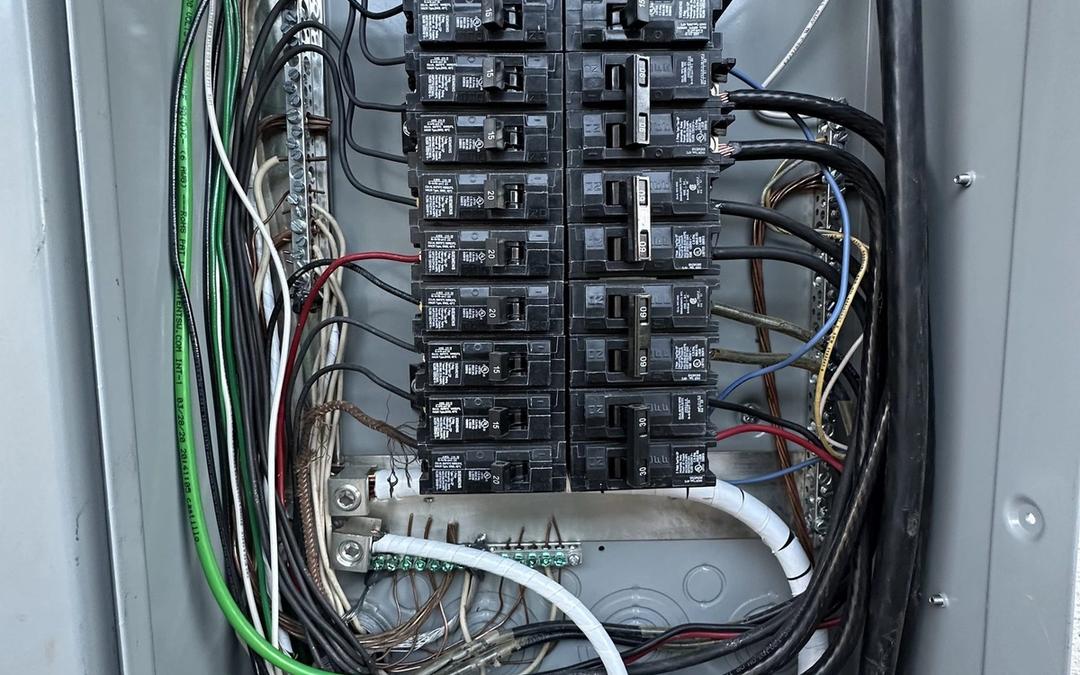
To understand why summer heat causes power outages, you have to understand how a standard circuit breaker works. Most homes use thermal-magnetic breakers. These devices detect dangerous currents using two methods: (opens in a new tab)
- Electromagnetism: (opens in a new tab) For sudden, massive surges (like a short circuit).
- Heat (Thermal): For long-term overloading.
Inside the breaker, there is a bimetallic strip. (opens in a new tab)As electricity flows through it, the strip heats up. If too much current flows through, the strip gets too hot, bends, and snaps the circuit open to cut the power.
The Problem with Summer: Circuit breakers are calibrated to operate at specific temperatures (usually around 77°F or 25°C). If your electrical panel is located in a hot garage or on an exterior wall in direct sunlight, the ambient temperature raises the baseline heat of that bimetallic strip.
Because the breaker is already hot from the weather, it takes less electrical current to push it over the edge. A load that wouldn't trip the breaker in winter might trip it easily in July.
Top 4 Reasons Your Breaker Trips in Summer
While ambient heat is a factor, it is usually a combination of heat plus high demand that causes the trip.
1. The A/C Overload
Your air conditioner works much harder when it is 100°F outside than when it is 80°F.
- The condenser unit draws more amps to try to cool the house.
- If the A/C unit is older or the filter is dirty, it strains the motor, pulling even more electricity. (opens in a new tab)
- This increased draw, combined with a hot breaker panel, is the #1 cause of summer tripping.
2. Direct Sunlight on the Panel
Take a look at your electrical panel. Is it mounted on the south or west side of your home? Does the sun beat down on the metal box all afternoon? The temperature inside a metal gray box in direct sunlight can be 30° to 50° hotter than the air temperature. This "oven effect" can cause breakers to trip even if you aren't using maximum power.
3. Loose Connections (Thermal Expansion)
Physics dictates that metal expands when it gets hot and contracts when it cools. (opens in a new tab) Over years of seasonal temperature swings, the copper or aluminum conductors in your panel can expand and contract enough to loosen the screws holding them in place. A loose connection creates electrical resistance, which generates more heat, creating a cycle that eventually trips the breaker or, worse, melts the wire insulation.
4. Older, "Tired" Breakers
Like any mechanical device, circuit breakers wear out. If your breakers are decades old and have tripped many times in the past, their internal springs and contacts may be weak. Extreme heat is often the final straw for an aging breaker.
Troubleshooting: What to Do When the Power Cut
If your breaker trips on a hot day, follow these steps safely:
- Check the Panel Temperature: Place your hand near (do not touch bare metal if you suspect a fault) the dead front of the panel. Is it hot to the touch? If it is burning hot, do not attempt to reset it. Call a professional immediately.
- Turn Off Major Appliances: Before resetting the breaker, turn off your A/C, stove, and dryer.
- Reset Once: Flip the breaker to "OFF" and then firmly back to "ON."
- Wait and See: Turn your appliances back on one by one. If the A/C kicks on and the breaker trips immediately, the issue is likely with the A/C unit or the circuit capacity, not just the weather.
Safety Warning: If a breaker trips immediately after you reset it, or if you hear a buzzing sound or smell burning plastic, stop. These are signs of a dangerous electrical arc or short.
How to Prevent Summer Electrical Issues
- Schedule an A/C Tune-Up: Ensure your unit isn't pulling more amps than it should.
- Create Shade: If your outdoor panel is in direct sun, planting a shrub nearby (keeping 3 feet of clearance) or installing a small shade structure can lower the panel temperature significantly.
- Inspect Your Insulation: Check the weather stripping on your doors and windows to keep the cool air in, reducing the load on your electrical system.
When to Call The Wire Guy
If you have constant flickering lights or breakers that won't stay on, call a licensed electrician. Dealing with electrical panels—especially those that are overheating—is dangerous work.
Contact The Wire Guy if:
- Your breaker trips frequently (more than once a week).
- The electrical panel feels hot to the touch.
- You notice discolored or scorched wires inside the panel.
- You are planning to add a new A/C unit or appliance and need a load calculation.